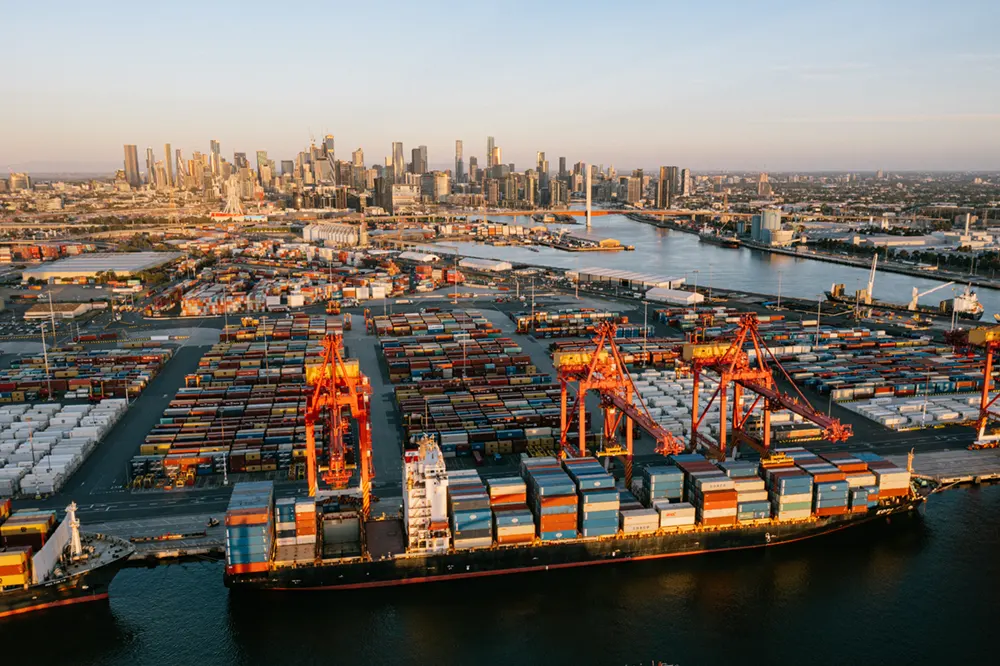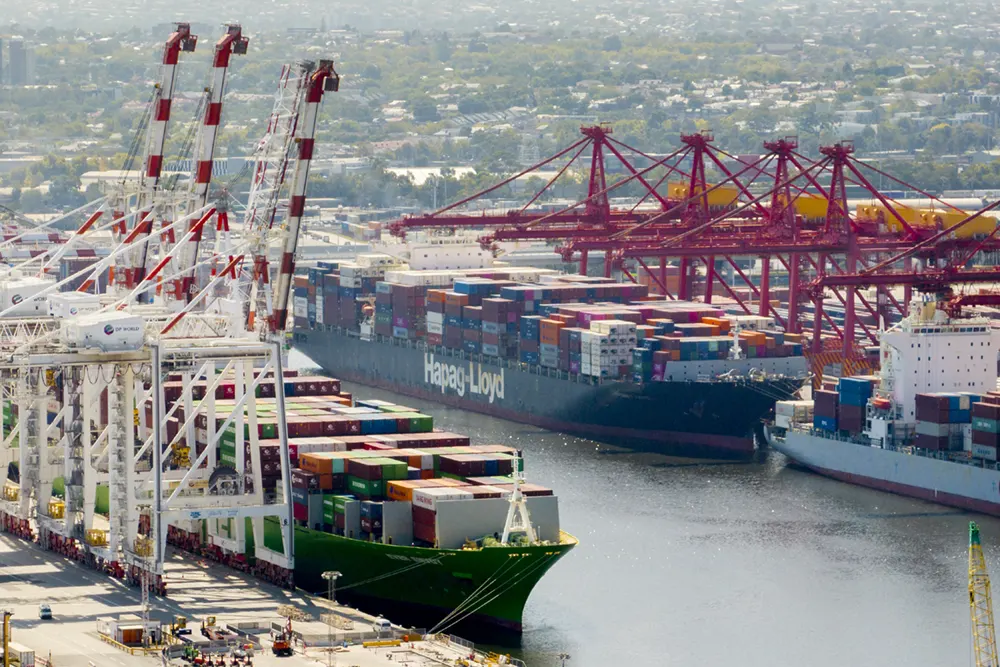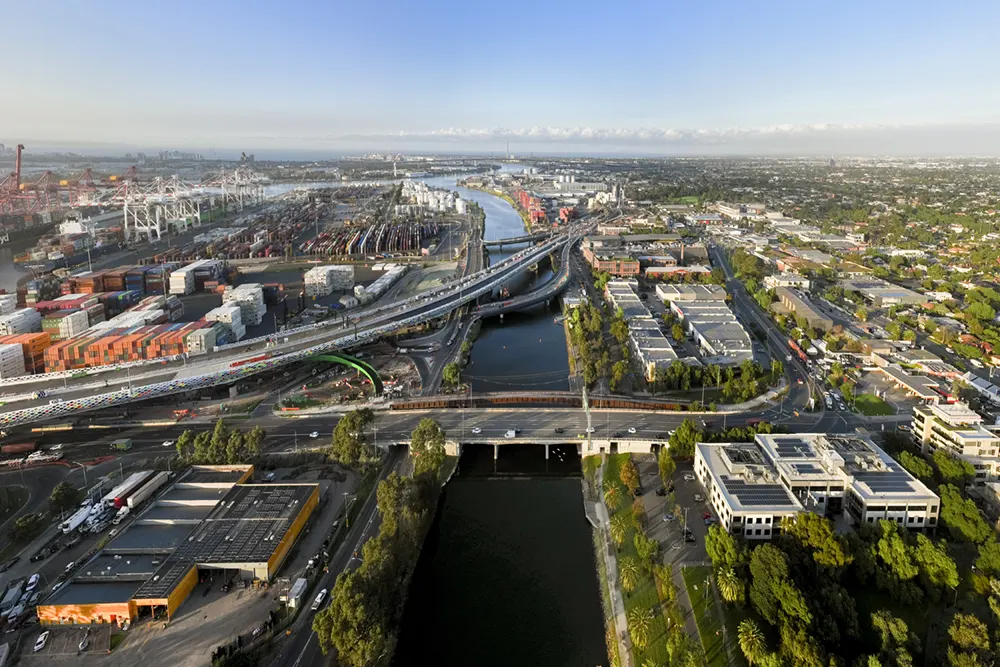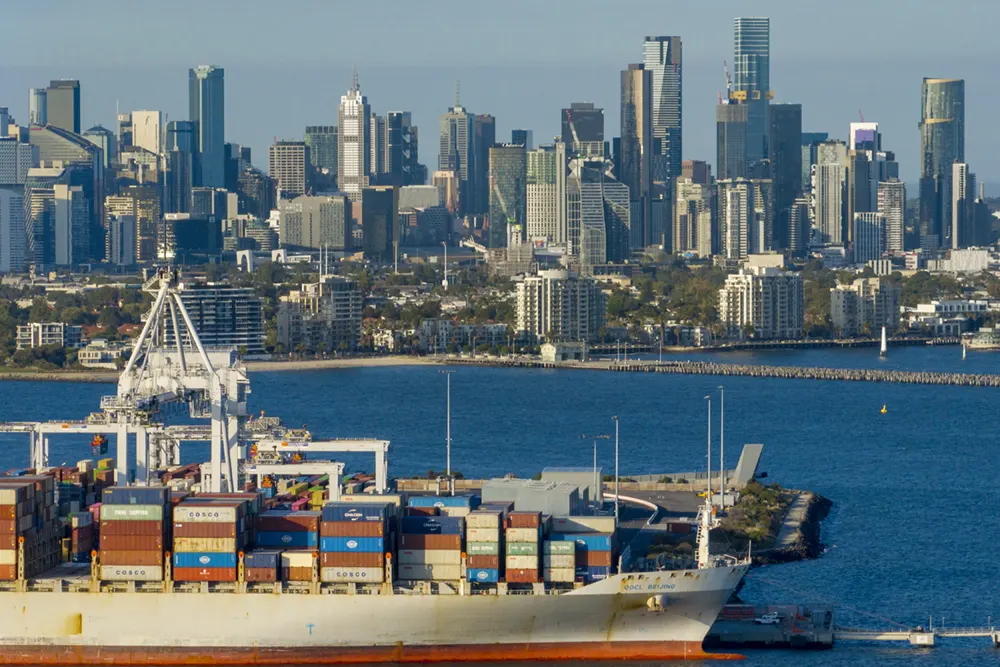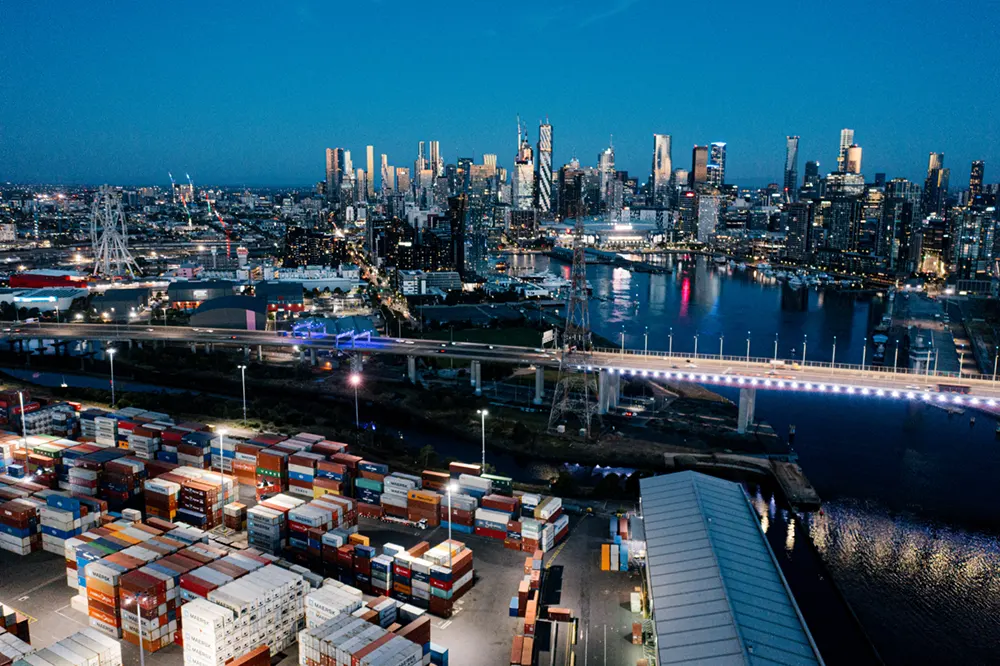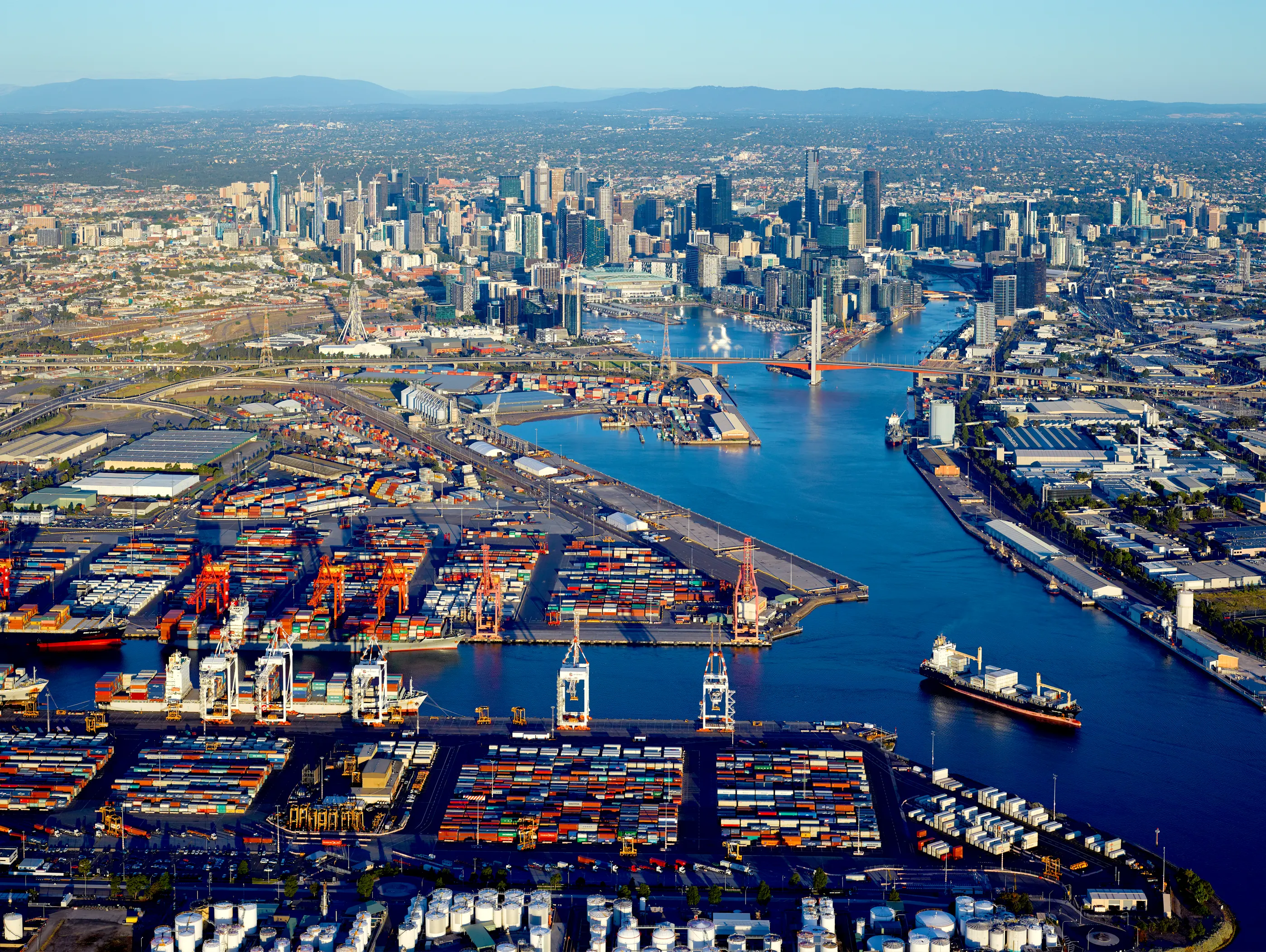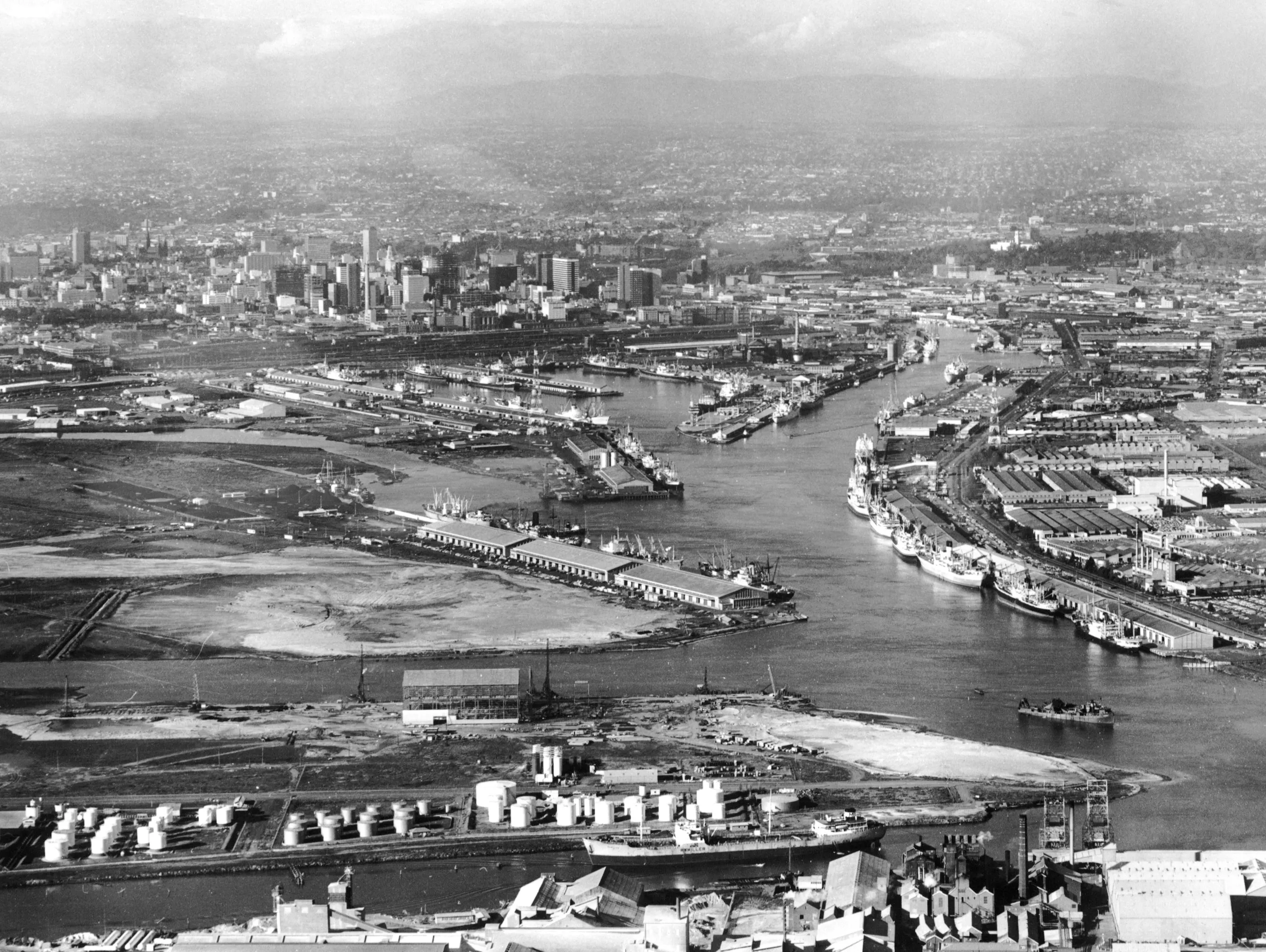
As Australia’s largest container, automotive, and general cargo port, Port of Melbourne is a vital trading gateway for South-Eastern Australia, facilitating more than one third of the nation’s container trade and enabling economic activity in the region.

The day-to-day lives of many Australians depend on the Port running efficiently. Located in the heart of Melbourne, the Port services more than 6 million Victorians.

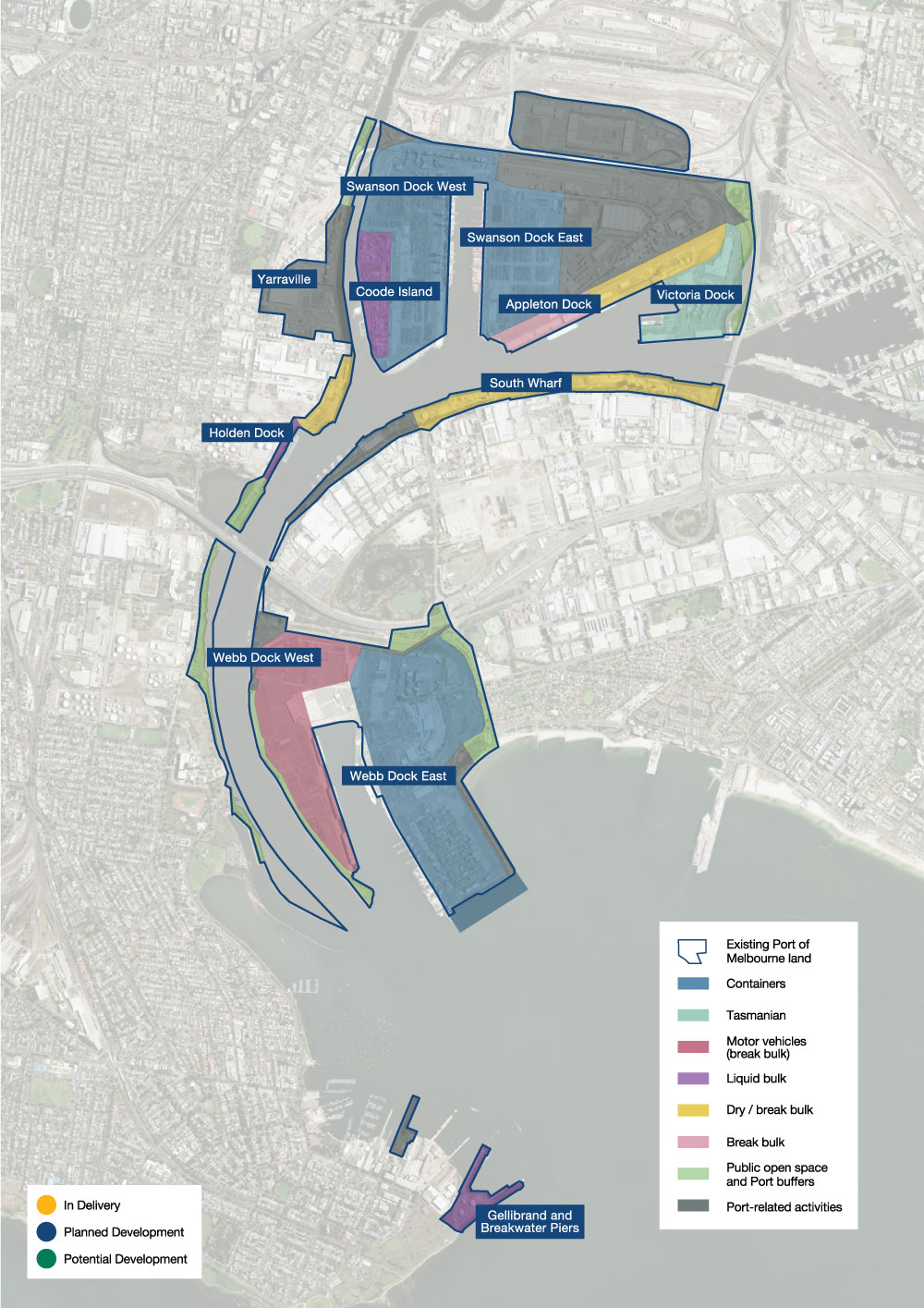
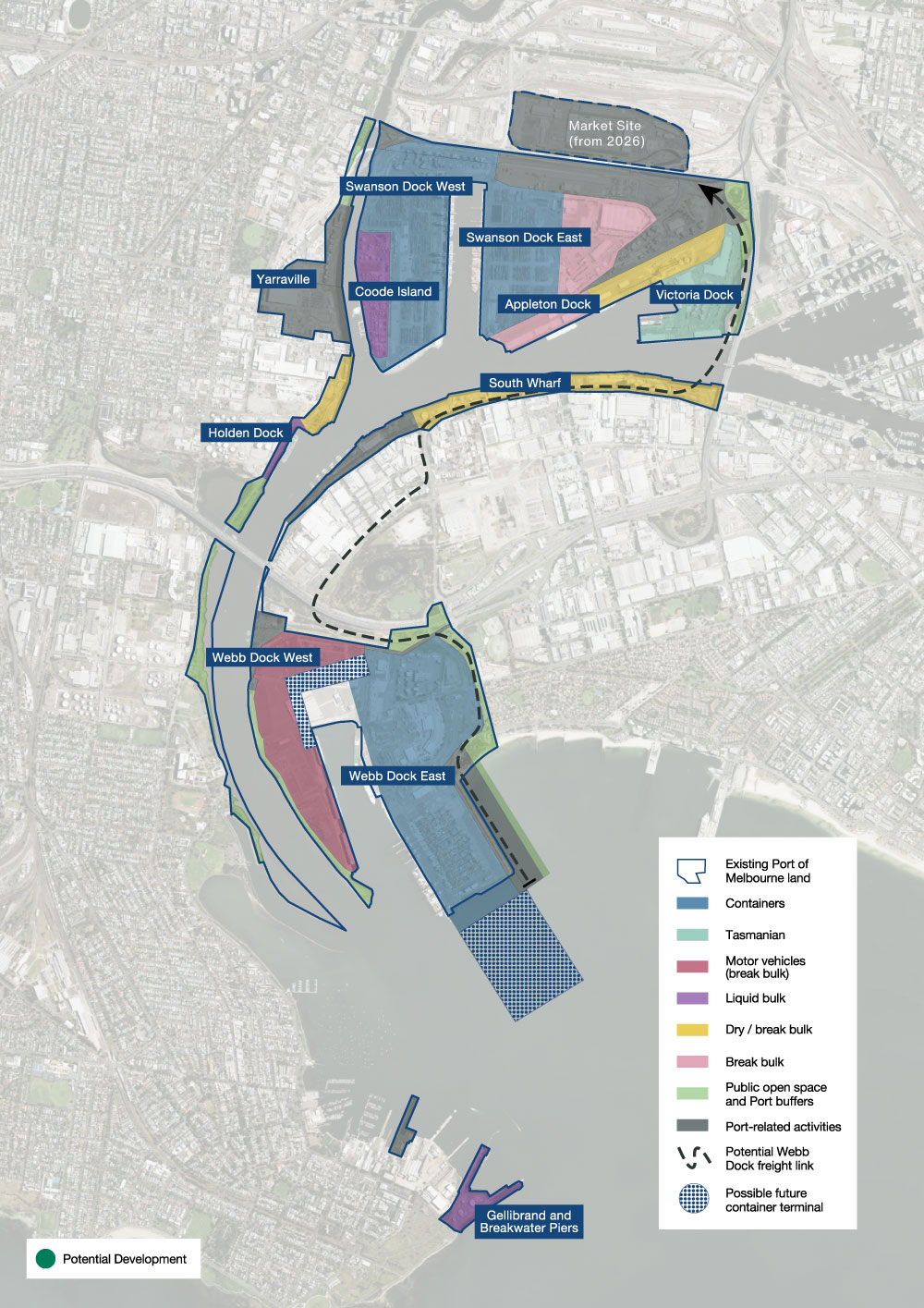
Our 2055 Port Development Strategy (PDS) sets out a vision for the future development of the Port for the next 30 years through to 2055.
1
2
3
4
1
2
2
3
3
1
2
3
1
2
3
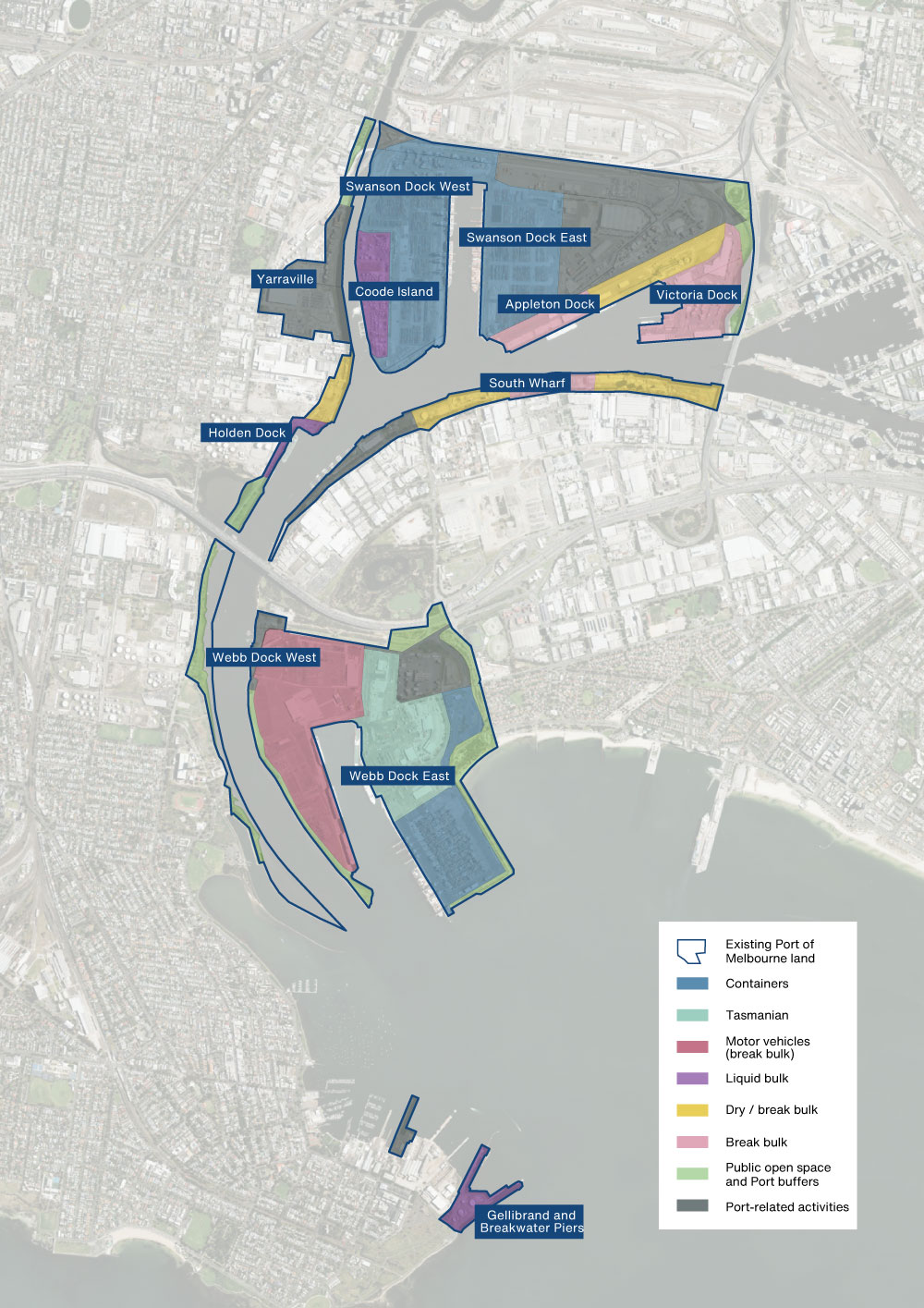
Map Map Map Map

Our Vision for
the Port

As our population grows and trade increases, port development will be critical to Victoria’s economic prosperity. By working together, we can continue to create more efficient and sustainable port infrastructure that supports future trade needs and benefits our growing population.

Explore the roadmap to the Port’s future

Download our 2055 Port Development Strategy

Preparing for the Future

The Port operates in a dynamic and changing environment with a number of growth and development drivers influencing how we plan for the future of the Port.

Discover how these key growth and development drivers are shaping the future of the Port

Download our 2055 Port Development Strategy

Strengthening Australia’s Economic Future

Port of Melbourne is one of Australia’s most critical infrastructure assets, serving as the key trade gateway that underpins economic growth.

$ 0 Billion
contributed to the national economy each year
0
full-time jobs supported across Australia
$ 0 Billion
of trade handled through the Port
$ 0 + Billion
invested in enhancing and maintaining port infrastructure since 2016 with a further $1.5 billion expected by 2030

Source

The evolution of the Port as South-East Australia’s trade gateway

1968
PRESENT
1835
Melbourne is settled and Hobsons Bay is first used for port-related activities.
1851
Victoria separates from New South Wales to become a self-governing colony.
1877
Formation of the Melbourne Harbour Trust, the precursor to the Port of Melbourne.
1887
Coode Canal established to provide direct commercial vessel access to Queen’s Wharf (across the river from the current Crown Casino building).
1893
Victoria Dock opened to provide more capacity to handle break bulk trades.
1941
Port Phillip Heads deepened to allow larger commercial vessels to visit the Port.
1969
Swanson Dock opened to provide dedicated container terminal capacity.
1970s
Webb Dock developed to handle a range of container, Tasmanian and automotive trades.
1997
Port of Melbourne first handles one million TEUs in a single year.
2009
The Channel deepened to allow 14m draught vessels to visit under all tidal conditions.
2016
50-year lease of the Port of Melbourne commenced.
2017
Port Capacity Project (Webb Dock East) delivered expanding the container handling capacity.
2023
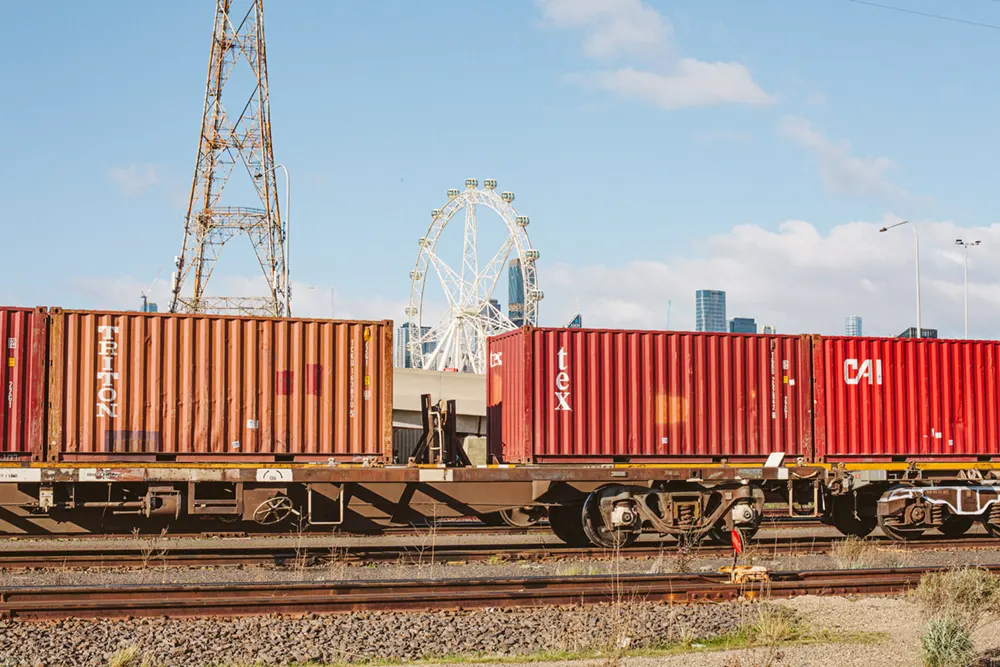
Port Rail Transformation Project delivered, providing direct rail access to the Swanson Dock East Container Terminal.
2024
Former Melbourne Market Site added to the Port, providing an additional 29ha of near port land to support freight and logistics activities, and supply chain efficiency.
2036
Capacity scheduled to come online at Webb Dock North container terminal

A Port That Responds and Adapts

We’ll continue working with industry, government, community and other stakeholders to enhance the State’s competitive position and economic prosperity, keeping Victoria a great place to live, work and do business.

Ongoing engagement with our stakeholders is important to continuing to build our understanding of our strategic context.

We have endeavoured to balance the many different views on how the Port should be developed and are pleased to have adopted stakeholder feedback in our final 2055 PDS. This includes:

More information about how we’ve considered stakeholder feedback is available in the Stakeholder Engagement Reports below:

Stage 2 Stakeholder Engagement ReportStage 3 Stakeholder Engagement Report