
17 September 2026 – Port of Melbourne’s latest Trade in Review report reveals Victoria’s economy continued to adapt and grow through Financial Year 2026 (FY26) despite global uncertainty, with the port recording a second consecutive year of record container trade.
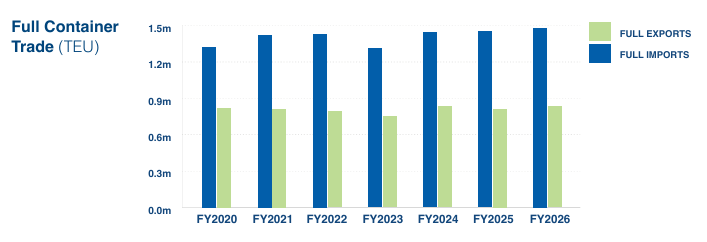
New data shows Port of Melbourne handled a record 3.52 million twenty-foot equivalent units (TEU) between July 2025 and June 2026, cementing its position as Australia’s largest container port and highlighting the resilience of trade across south-east Australia.
Port of Melbourne CEO Saul Cannon said the results point to an economy that is continuing to evolve rather than slow.
“Global conditions remain uncertain, but south-east Australia’s trade performance demonstrates the importance of resilience and adaptability,” Mr Cannon said.
“What stands out is not just the volume of trade moving through the port, but the changing shape of that trade. Alongside resilient consumer demand, we saw growing volumes of industrial and construction-related imports, indicating businesses are continuing to invest in Victoria’s future.”
Trade patterns point to an evolving economy
The report highlights a shift in trade patterns during FY2026: while consumer goods remained a major driver of imports, growth increasingly came from industrial and construction-related materials, with commodities such as cement and gypsum among the strongest performers during the year.
Victoria’s export performance also remained strong and diversified. Agricultural goods continued to underpin exports. Strong growth was recorded in beef, paper and paperboard, and scrap metal exports, helping offset softer conditions in commodities such as cotton and wheat.
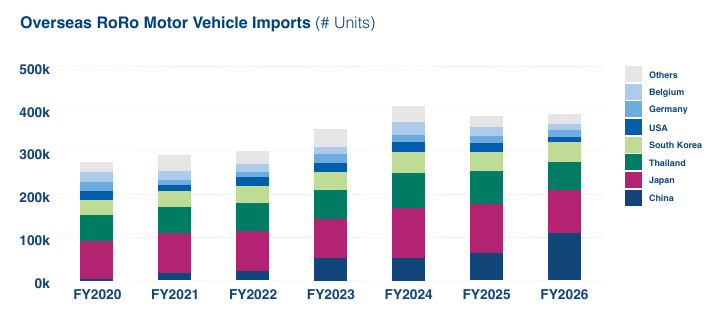
Another notable trend was the continued evolution of automotive trade. During FY2026, China overtook Japan to become the largest source of imported motor vehicles through Port of Melbourne for the first time, reflecting broader shifts in global manufacturing and vehicle supply chains. Over the last six years, China’s share of vehicle imports increased significantly, from 1 per cent in FY2020 to 28 per cent in FY2026.
Resilience amid global disruption
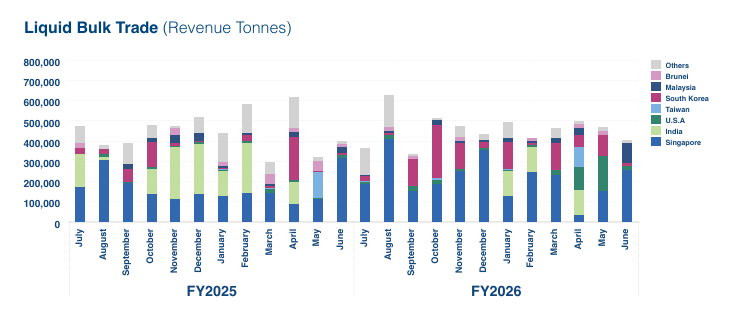
The report also found Victoria’s trade remained resilient amid major global disruptions, including changes to United States tariff policies and supply chain impacts stemming from instability around the Strait of Hormuz. Export demand remained broadly diversified, while fuel supply chains adjusted successfully to changing sourcing patterns during the year.
Mr Cannon said trade continues to provide a valuable real-time indicator of economic activity.
“As Australia’s largest container port, we have a unique view of the goods moving through the economy.”
“The trends we’re seeing suggest Victoria continues to navigate global challenges from a position of relative strength. Population growth, business investment and diversified export markets continue to underpin demand and support economic resilience.”
“Behind every container, vehicle and tonne of cargo is a network of businesses, growers, manufacturers and supply chain operators helping keep Victoria moving. This report reflects their contribution to the state’s ongoing prosperity.”
Read the full report here: FY2026 Port of Melbourne Trade in Review
For more information contact:
Nicole Ng
0427 700 844
nicole.ng@portofmelbourne.com